


Collect and Display Reviews Effectively to Sell More
Learn best practices for collecting and displaying customer reviews to enhance your shop's visibility, boost conversions, and build trust with shoppers.
Does your online shop attract a lot of traffic from various sources, yet you get low conversion rates? Do the visitors browse many products while your sales are still comparatively low?
The most common reasons for low conversions are a poorly structured purchasing process, a lack of trust signals, poorly targeted traffic, too many technical issues, weak product pages, or even high delivery costs.
UK shops have one of the best conversion rates in the world (between 2.5% and 3.5%), outperforming the US and much of the EU. If you’re under 2%, there is definitely room for improvement!
In this article, you'll learn the six main causes of low conversions and how to solve them.
Table of contents:
Conversion problems rarely affect the entire purchase journey at once. Customers typically drop off at a specific stage, whether it’s the homepage, product page, cart, or checkout. The following signals will help you pinpoint where you're losing potential buyers:
If you recognise at least two of the symptoms above, your website is definitely struggling with conversions. It's time to find the cause and fix it.
Let's explore the most common reasons why your shop's visitors are not converting into customers:
It doesn't matter how good your offer is if your website isn't working properly. Customers don't want to struggle with their phones or computers. They'll simply leave instead.
There are two main problems your customers are likely to encounter: slow loading times and an insufficient mobile version.
A website that takes longer than a few seconds to load is irritating and questionable. Users see a blank screen with a loading animation and begin to wonder if the store is still operational or if they've stumbled upon a broken website. Every such doubt is a lost customer.
Check how quickly your store's website loads. The basic page layout, main product image, price, and Add to Cart button should load immediately. If they don't, investigate what's blocking the page from loading.
Recommended reading:
7 Tips to Increase Your Online Shop's Page Loading Speed
Sometimes, a small tweak is enough to significantly speed up a website, such as reducing the size of images or introducing lazy loading.
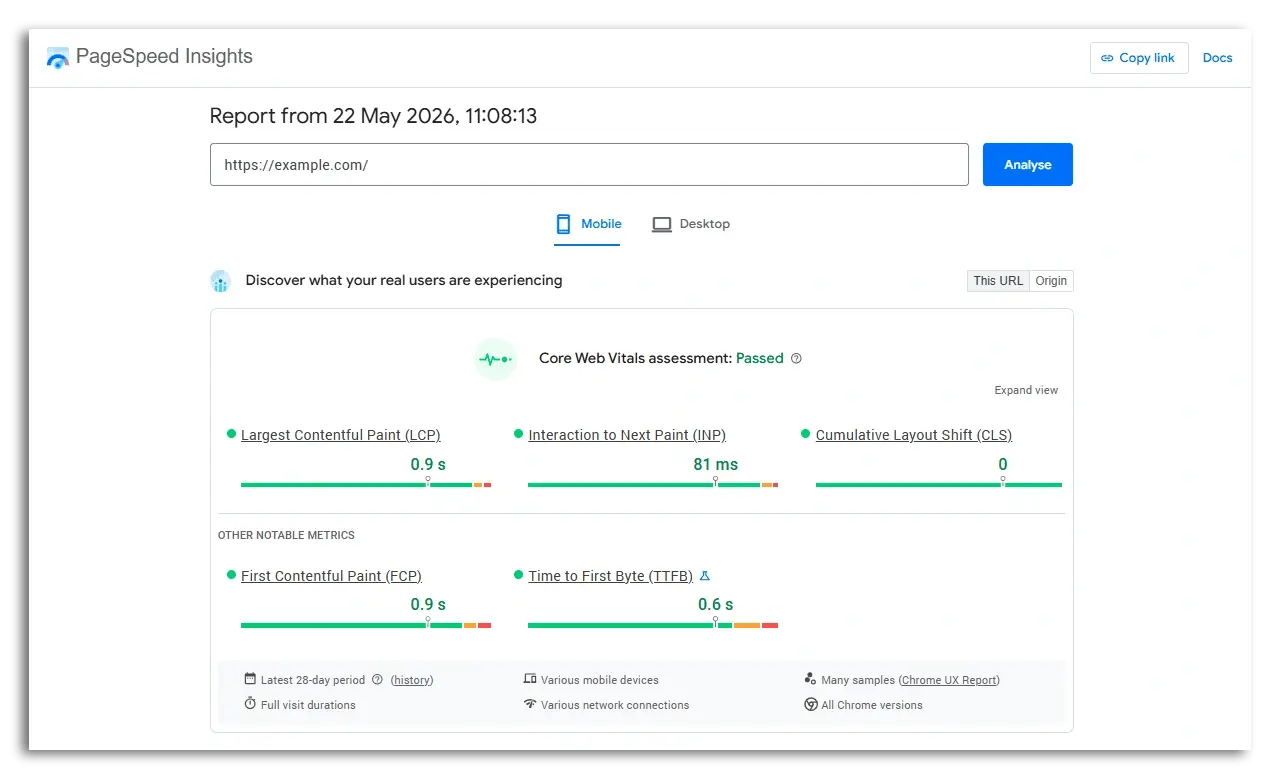
PageSpeed Insights allows you to easily test your store's page loading speed.
By now, we all know that mobile devices are extremely popular for online shopping. That’s precisely why most online shops have a mobile version of their website. However, not all mobile sites are created equally. It's not just a matter of whether elements will fit on a smaller screen, but also whether users can use them properly.
Buttons should be large enough for the user to click. The shopping cart should have a flow adapted to touchscreens. The goal of the mobile version is to make shopping easier, so it's important to ensure the user doesn't encounter any barriers.
Tip: Test the entire shopping process regularly. This may seem obvious, but it's worth checking out your website from time to time. Check that the store's website displays correctly on your phone and that you can shop efficiently. You can also ask other family members or friends to do the same. If any step is problematic, you already know how to fix it.
Technical issues are the only causes of low conversions that you can eliminate completely. A responsive and fast website is the foundation on which you build the rest.
A premium organic cosmetics store is launching a Facebook campaign targeting a pretty broad audience: women aged 25-50, interested in beauty. Traffic is growing, but sales aren't. Why? Because it attracts people looking for deals and the lowest prices. They see a £100 price tag for a cream and leave – that's simply not the store's target audience.
How can you fix this? Start by checking which traffic sources are actually converting. In Analytics, compare conversion rates across channels: Google Ads, Facebook, organic traffic, and price comparison sites. You might find that you're paying for traffic that never buys, while organic traffic converts well but is under-performing.
SEO is a powerful source of traffic, but not every visit from Google is equally valuable.
If your blog articles rank for topics like “how to care for sensitive skin” or “the best ingredients in creams”, you're attracting people in the research phase. This increases your brand recognition, but rarely generates sales.
“Sensitive skin cream price”, “where to buy vitamin C serum”, “best natural cosmetics store” – this is what people with wallets in hand are looking up. If your product pages aren't optimised for these keywords and purchasing intent, you're losing valuable traffic.

A customer has added a product to their cart. They're determined to buy. Suddenly, they find themselves having to go through five screens: registration, filling out a dozen form fields, email confirmation, choosing shipping, and selecting a payment option.
Somewhere along the way, a phone rings or a notification arrives, and that's it. The average cart abandonment rate globally is about 70%, and this is often due to an overly long or complicated checkout process.
The best checkout is a maximum of 3-4 screens: shopping cart, shipping details, payment, and confirmation. Each additional step is another chance for cancellation. The "buy as a guest" option should be immediately visible. Requiring registration before purchasing is one of the fastest ways to lose a customer.

Shutterstock/puhhha
Forms are also important. Every extra field adds friction, so it's worth minimising these wherever possible. It might be worth deselecting the phone number field as mandatory if you sell e-books sent via email. Studies show that shortening a form from 11 to 4 fields can increase conversions by up to 120%.
Shipping costs are another barrier. Highlighting low shipping costs can grab your users’ attention and encourage purchases. However, when the shipping cost turns out to be significantly more before the process is complete, doubts arise. Perhaps a competitor with a slightly higher price will have better delivery options?
Having a minimum order value for free shipping can help increase basket values. People add items to reach this threshold. If the average basket value in your store is £60, set the free shipping threshold to £70 and see what impact this has.
Payment methods also matter. Make sure you prioritise the most popular options for the given market you’re operating in. If you only offer traditional bank transfers and cash on delivery, you're losing a significant portion of potential customers.
If a customer has doubts about whether a store is real, they will need really solid arguments to make a purchase there.
HTTPS encryption or a professional-looking storefront aren't things you usually have to worry about these days. Most hosting providers include encryption, and even basic templates look good.
Customers pay attention to who is behind a given store and what others say about it.
A store without visible contact information, an About Us section, or a clear returns policy looks suspicious. Customers want to know who the store is, how to contact them, and what the terms are for returning a product.
Trust in e-commerce is built through transparency. If your store information is clearly visible and your legal texts are clear, buyers will feel more confident.
A similar situation occurs when there are no customer reviews. If your store doesn't display them, or the last reviews are from five years ago, you risk losing a customer. People trust the experiences of other buyers more than the promises of a seller. Even a single negative review is better than no reviews at all – at least it shows that the store actually sells.
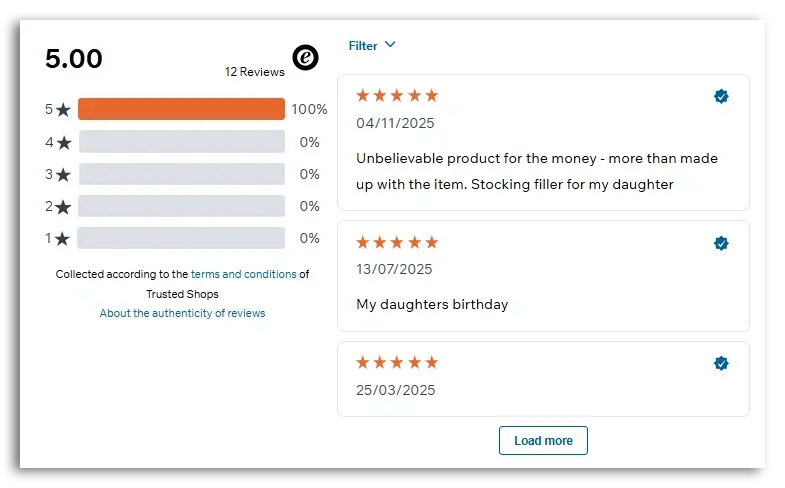
Source: Love Kate’s
How you present your offer has a significant impact on how potential customers perceive it. If it's not appealing, it won't attract attention and convert. Descriptions and images are key.
Poor product photography is one of the most common problems. A single photo on a white background, low resolution, no zoom options… the customer can't see what they're buying. Products look better in context: shoes on a foot, a dress on a model, furniture in a living room. You probably already have many product images; use them to their full potential!
Product descriptions are another problem. If the product description only consists of three sentences copied from the manufacturer or is just a list of dry technical features, you won't convince anyone to buy.
The customer wants to know what they'll gain. They don’t want to know that the jacket has a modern design, but that it's waterproof and has internal pockets. Today, creating such descriptions is much simpler thanks to AI support. A few raw data points and a single idea are enough to create an engaging description.
Recommended reading:
Using AI in E-commerce Without Losing Trust
Sizes, materials, technical specifications, and stock availability should all be visible in the description. If a customer needs to search for this information or contact customer service, they'll simply go where they can find it without the hassle of picking up the phone or writing an email.
Be sure to add product reviews here as well. Customers can learn how the product performs in practice and find answers to questions they haven't even thought of asking yet.

Why should a customer buy this product right now? If you can't answer this question on the product page, the customer won't be able to either.
Be specific: free shipping for purchases over £70, a 5-year warranty, 100-day returns, and an eco-certification. These are the things that distinguish you or this particular product from the competition.
It’s almost important to guide the shopper to the next step. A clear call to action isn't just an " Add to Cart" button. It's the entire page structure that leads to a purchase: visible price, availability, reviews, delivery time, and payment options. Customers should be able to make a decision without leaving the product page.
Tip: Create a sense of urgency. Show them stock availability (3 left), expected delivery times (Order within 2 hours to get the delivery tomorrow), or time-limited promotions. This helps them make decisions quickly and reduces procrastination.
Sometimes the reason for low conversions is simple: your price seems too high compared to the competition. Customers encounter multiple offers, including those from Asian marketplaces, and compare them. If your offer doesn't communicate value from the very start, it will turn away potential buyers.
In other words, customers are willing to pay more if they know what they're paying for. Don't hide the fact that your products come from local producers and that you use only eco-friendly materials.
A "Made in the UK" label next to the product name immediately increases the perceived value. The buyer knows it's not some dropshipping item from China. Whatever justifies the higher price should be clearly visible on the product page.
Tip: Lowering prices by including promotions is also a good idea. A discount for signing up for a newsletter or loyalty cards can sway undecided buyers, as long as the information about them is visible. A pop-up or banner near the buy now button can work wonders here.
Improving conversions is a process, not a one-time action. Don't change everything at once! Doing too much at once means you won't know what actually worked, and you might even see worse results. Start systematically:
If you're not sure where to begin, start with microconversions. Smaller goals that lead to a purchase, like signing up for a newsletter or adding a product to your cart. Sometimes the problem isn't the checkout itself, but rather earlier in the customer journey.
The most common reasons are: technical problems, inadequate targeting, a complicated purchasing process, lack of trust and information about the store, weak product pages, and too high a price without communicating the value.
The average conversion rate in UK e-commerce is 2.5-3.5%, one of the highest in the world. Globally, you should think closer to 1-3%. If you're at around 1%, there's room for improvement; anything below 1% indicates something needs fixing. However, remember that a good conversion rate depends on your industry, average basket size, and traffic sources.
The effects depend on the type of change. Technical fixes can produce results within a few days. Content changes, adding reviews, or optimising product pages typically take 2-4 weeks to see a noticeable difference. The key is to implement changes one at a time and monitor the results.
Start with technical issues – check your page's loading speed and mobile experience. This is the easiest fix and yields quick results. Then analyse your traffic sources and see which channels actually convert. Only then should you focus on building trust, improving your product pages, and testing various solutions.
Low conversion rates rarely stem from a single cause. More often than not, it's a combination of several issues: a slow website will scare away some customers, those who stay won't find the information they're looking for, and those who do reach the shopping cart will abandon the complicated checkout process.
The good news? You don't have to fix everything at once. Start with diagnostics: determine which of the six causes described in the article apply to your store. Then, choose one or two areas and improve them systematically.
Observe the results, test changes, and learn from the data. The stores with the highest conversions don't achieve this in a month. They constantly optimise, test, and improve the shopping experience.
This article was originally published and adapted from our Polish blog: Dlaczego mój sklep nie konwertuje odwiedzających?
02/06/26